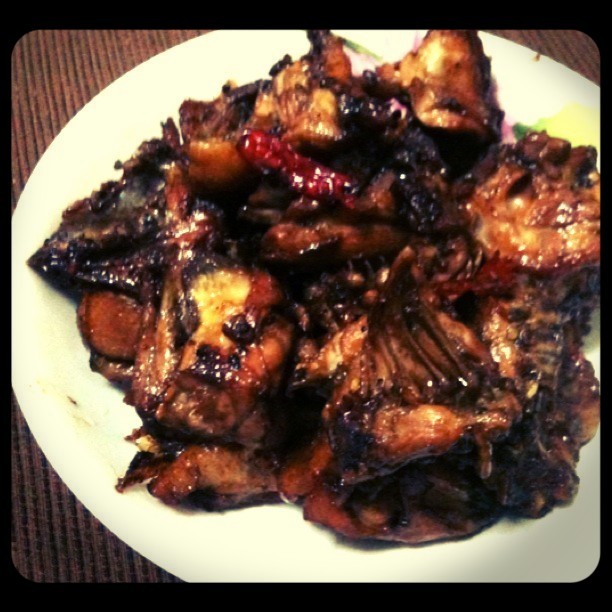
Pinakbet con Lechon


As an Ilocano you already know what Pinakbet is. This is the most-cooked ilocano dish here in the Philippines. It is usually made from vegetables like long beans, eggplant, bitter-gourd, okra, squash, and sigarilyas. It is sauteed and cooked together with fish sauce or shrimp paste, some prefer shrimp paste because it is easier to find even in mini stores in the neighborhood. I've learned to eat this dish when I'm in high school because most kids before and even today do not like vegetables. The typical meat that was combined with this was pork but to give it a twist I've used our left over Lechon Cebu that we bought from the supermarket. Lechon Cebu alone was flavorful enough to give flare on the vegetables. The best partner for this dish was crispy fried fish. I hope you can enjoy and like this dish.


Ingredients

  1/2 kilo Lechon Cebu or Pork (diced)
2 medium onion (julliened)
5 cloves garlic (crushed)
1/2 cup long beans
1/4 cup bitter gourd
1/2 cup eggplant
1/2 cup squash
5  pcs. sigarilyas
5 pcs. okra
  1/4 cup shrimp paste 
1 cup water
salt and pepper to taste
  4 tsp oil
Instructions   

1. Cut the vegetables into serving size. Make sure to cut it in proper proportion to each other for better appearance. 
2. Heat oil in a large pan, saute garlic until golden brown and onions.
3. Add the pork and simmer for 5 minutes then combine the water. Wait to boil.
4. Put the long beans, bitter-gourd and squash. Simmer for 3-5 minutes.
5. Add the rest of the vegetables and shrimp paste.
6. Sprinkle some salt and pepper to taste. It is best not to overcook vegetables so that it's still full of vitamins and minerals.

Just got Lucky!


Mochi Sweets


We found a Japanese favorite dessert in SM MoA last week, Mochi Sweets. Mochi is a Japanese rice cake that has a different filling inside and it is shape like a ball. It is a round rice cake that has a indulging sweet filling and has many flavors to choose from. 


Mochi cost for about 70 pesos each, I'm not a fan of Mochi but it is nice to eat this kind of dessert once in a while. My wife bought a box which cost 720 pesos and it has a dozen of different flavored Japanese rice cakes. Here are the 15 different flavors of Mochi Sweets:


Black Chocolate
Blueberry Cream
Caramel Macchiato
Chestnut Cream
Chocolate Mousse
Chocolate Cream
Green Tea
Honey Lemon Cream
Mango Mousse
Mango Yogurt
Peach Cream
Purple Potato
Red Bean
Sakura
Strawberry
 
Photo Courtesy of Mochi Sweets PH 


Chicken Adobo


I will now share my favorite Filipino dish, Adobo. It has been called the quintessential Philippine stew, served with rice both at daily meals and at feasts. I consider it as the national dish of the Philippines. It is well known worldwide especially in the US. There is also a movie about a Filipino who lives in the US and the title was "American Adobo". Adobo is commonly packed for Filipino mountaineers and travelers because it keeps well without refrigeration. Its relatively long shelf-life is due to one of its primary ingredients, vinegar, which inhibits the growth of bacteria. It is a common dish during out of towns, team buildings, friends and family gatherings. There are also many variations of Adobo, there are some with liver, coconut milk, turmeric etc.. This one is tuyo (no soup) version,  it is my preferred way of cooking adobo because this is perfect for steamed rice. I hope you can also enjoy my version of tuyong adobo.

Ingredients

  1 whole chicken, (cut into serving pcs)
2 medium onion (julliened)
5 cloves garlic (crushed)
  1/2 cup soy sauce
 1/4 cup vinegar
5 pcs chili fingers
2-3 pcs dried bayleaf 
2 tsp ground pepper
2 tsp oil
 
Instructions   

1. In a large pan, heat oil then, saute garlic until it turns to golden brown and add onions.
2. Put the chicken and stir. Simmer for 5 minutes.
3. Pour the soy sauce and vinegar.
4. Add the bayleaf, chilis and ground pepper. Simmer until only left sauce was the oil of the chicken.
5. Serve with steamed rice.

Sinigang na Hipon


Sinigang again? Yes, my wife and I both love sinigang. This time it's shrimp version for Filipino's most love dish. Shrimp is abundant in our country but sometimes the price was still high. You can buy medium size shrimp for 400-500 pesos ($8-$10) a kilo. My wife requested for this one because she has a flu that day. Warm sour soup are perfect to replenish his body for faster recovery. Tamarind base soup are perfect for shrimps because it will take having the stench or taste of fish.This dish was also a best seller among restaurants here in Pinas. Most balikbayan's love to munch on this one on the day that they arrive here. I hope you can also enjoy this simple but sumptuous dish.

Ingredients

  1 kilo shrimp
5 long green chilis
2 medium size red onion (quartered)
2 tomatoes (quartered)
1 bunch kangkong
1 sinigang mix (1 liter pack)
750 ml water
salt and pepper to taste
  Instructions  

1. In a large pot, put the water and bring to boil.
2. Add the onions and tomatoes, simmer for 5 minutes.
3. Put the shrimp and simmer until it turns red.
4. Add the kangkong, long green chilis and other vegetables. You may add other vegetables like horse radish, eggplant, string beans.
5. Pour the sinigang mix and stir well. You may add water depending on the level of sourness that you prefer.
6. Sprinkle some salt and pepper to taste.

Just got Lucky!.

Pork Sisig

.
Today I will share one of Filipino's most favorite dish, Pork Sisig. It is made from pig ears that was boiled and grilled with chicken liver. There are many varieties of Sisig in the Philippines, the most popular version is from Pampanga. This dish is a best seller among restaurant's around Manila. It is usually served on a sizzling plate together with fresh egg on top. When we dine out together with my family this is the one that I always pick from the menu. When we go out with our friends for some booze we always have this one on the table. It is the best pulutan  for most of us. 

I hope you can enjoy this one together with a glass of beer or serve it to your family with steamed rice. 

Ingredients

  3/4 kilo pig ears
1/4 kilo liempo (pork belly)
1/4 kilo chicken liver
2 medium onion (minced)
3 pcs calamansi
  3 tbsp soy sauce
1 knob ginger (minced)
5 pcs chili fingers
1/2 cup butter
2 tsp oil
2 pcs egg
salt and pepper to taste
 
Instructions 

1. In a large pot, boil water together then put the pig ears and pork belly. Simmer for 45 minutes then drain.
2. Grill pig ears and pork belly until it turns to golden brown. Chop and mince then set aside.
3. In a large pan, heat oil and add butter then saute half of the onion until its soften.
3. Add ginger and chicken liver then cook for 5 to 10 minutes.Crush and break the liver finely.
4. Put the mince pig ears and pork belly then simmer for 5 minutes.
5. Add the soy sauce and chili then mix well.
6. Sprinkle some salt and pepper to taste.
7. Put the eggs and stir it gently until it blends with the pork.
8 Serve it on a large plate and put chili and onion on top. Put calamansi when you're ready to eat.


Just got Lucky!.

Baguio Beans with Longanisang Lucban


This time I will share a budget-friendly recipe that you can prepare for only 10 minutes. This is sauteed beans with longanisa from Lucban. Longanisa sausages are flavoured with indigenous spices, with each region having its own specialty. There are many varieties of longanisa in the Philippines, Lucban is known for its garlicky longanizas ; Guagua for its salty, almost sour longanizas; Vigan for its smoky and galicky longanizas; Baguio longanizas  is known for its distinctive sweet taste and small portions.

I love to eat longanisa any meal of the day but my wife doesn't have similar taste buds when it comes to this one. My favorite is the one from Vigan, maybe because I'm Ilokano. This one is the most garlicky and smoky longanizas. You can make longaniza from pork, beef and also chicken. I hope you can enjoy this simple and tasty dish.

Ingredients

3/4 kilo baguio beans (cut diagonally)
1/2 kilo lucban longanisa
2 cloves garlic (minced)
1 red onion (minced)
2 tsp oyster sauce
1 tsp soy sauce
1 tsp brown sugar
2 tbsp oil
salt and pepper to taste

Instructions 

1. Remove the pork meat inside the longanisa.
2. In a large pan, heat oil then saute garlic and onion until its soften.
3. Add the longanisa and simmer until the meat is cooked.
4. Put the beans and stir fry for 3 minutes.
5. Combine soy sauce, oyster sauce and brown sugar in a small bowl then pour it to the pan.
6. Sprinkle some salt and pepper to taste.


Just got Lucky!.


Pork Sinigang


In this post I will share the dish that most Filipino's love to eat. Pork Sinigang was a usual viand that was serve during lunch or dinner. If you read my previous post, sinigang has a sour soup base. Its base is usually made from tamarind, guava, etc. You can use most parts of the pig in cooking sinigang. For a creamy texture of the broth you may add smashed gabi (taro). For the vegetables, you may add okra, kangkong, radish (daikon), long green chilis, eggplant, etc. It is better to use the bonier part of a pig to have a rich soup flavor.
 Try this recipe and you will surely love this one. 

Ingredients

1 kilo pork (cut into serving size)
"Sinigang Mix" for 1 liter soup
  2 red onion (quartered)
3 pcs tomato (quartered)
4 pcs long green chilis
 1 bunch water spinach (kangkong)
1 medium radish (cut diagonally)
5 pcs. Okra
800 ml water
salt and pepper to taste

Instructions

1. In a large pot or pressure cooker, put the water, pork, onions, tomatoes and 2 tsp of rock salt. Let boil and simmer for 30 minutes until the meat soften.
2. Add the radish and okra, simmer for 3 minutes.
3. Put the kangkong and long green chilis.
4. Pour the Sinigang Mix and add water depending on the level of sourness that you prefer.
5. Sprinkle some salt and pepper to taste.

Just got Lucky!

Kilawing Tuna sa Gata ( Tuna Ceviche)


Last week we  travel to Bulan, Sorsogon for a 4 days vacation with my wife and in-laws. It was a 13 to 14 hours drive from manila. It is strategically located at the southwestern most tip of the island of Luzon and is a premier town in the Province of Sorsogon. Major export of this town are from its coastal waters, agricultural lands produce rice, copra, and abaca fiber. Most bicolano dishes are cooked with gata (coconut milk).

We bought this fresh tuna from Bulan wet market and his uncle prepared the dish. This dish is typically made from fresh raw fish marinated in citrus juices such as vinegar or lime and spiced with chili peppers. Additional seasonings like chopped onions, salt and ginger are also added. The twist here is the coconut milk that was added which is not usually a part of the ceviche. At first I was curious if why did her uncle put coconut milk on this one but when I tasted it all questions was answered. Coconut milk add creaminess on the dish, it is still the usual kilawin but made creamier. This dish is so easy to prepare but make sure that the fish is fresh to avoid food poisoning.

Ingredients

1 kilo tuna
2 thumb ginger (minced)
  3 medium red onion (circle cut)
1/2 cup vinegar
1/4 cup coconut milk
2 tsp ground-pepper
5 chili fingers (chopped)
salt

Instructions 

1. Fillet the tuna and cut into small pieces. Set aside.
2. In a large bowl, put the vinegar and coconut milk.
3. Add the chopped tuna, ginger, chili's and onions
4. Sprinkle some salt and ground-pepper.
5. Stir until all blended together. You may add more chili's for more spicy kick.

Just got Lucky!.

Braised Pork Belly and Tofu


Pork belly or "Liempo" is a boneless cut of  fatty meat from the belly of a pig. This pork cut is popular among Asian countries that is used in many different cuisines. Tofu or bean curd originated from China and may Filipino use this as an extender. Tofu is a great source of protein and has a low calorie content which is good specially for vegetarians.

This tokwa't baboy recipe came from my mom's homecooked meals. I remember when this was our lunch or dinner, I assure you that leftovers has no room for us. Try this tasty recipe to add some varieties to your daily meals and this is best eaten with steamed rice.

Ingredients

1 kilo pork belly
1 block tofu
  4 cloves garlic (minced)
1 medium red onion (julliened)
1/2 cup soy sauce
1/4 cup vinegar
1 cup water
4 tbsp brown sugar
1/4 cup chinese celery/kintsay (minced)
1/4 cup butter
cooking oil
salt and pepper

Instructions 

1. Cut pork belly and tofu to your desired serving sizes.
2. In a frying pan, heat oil and fry tofu until golden brown. Set aside.
3. In a medium pot, saute garlic and onion then add the pork belly, soy sauce, vinegar and water. Let boil and simmer until the meat becomes tender. Add water as necessary.
4. Add the tofu and simmer until it absorb some of the sauce.
5. Put the chinese celery and stir well.
6. Sprinkle some salt and pepper to taste.

Just got Lucky!.

Buttered Garlic Shrimp


You want an easy and tasty shrimp recipe? Yes, the dish was so easy and you can't go wrong in preparing this one. If you already read my previous recipe's, it is given that my wife love shrimp dishes. This was prepared during a weekend lunch together with my mother-in-law. Seafood taste better when cooked together with butter.

"Buttered Garlic Shrimp" is a best seller in dampa style restaurants. In dampa style restaurants, you will be the one who will buy fresh seafood's from their mini wet market. You will also choose if what type of dish it will be coo from their menu. Most shrimp dishes in this type of restaurants are sinigang, tempura and camaron rebosado.

This recipe usually comes with lemon-lime flavored soda (sprite), you can use any lemon flavored soda that is available. I hope you can enjoy this dish together with steamed rice.

Ingredients

1 kilo shrimp
  6 cloves garlic (minced)
1/4 cup butter
200 ml lemon-lime flavored soda
2 tsp freshly ground peppercorn
salt to taste

Instructions 

1. In a large pot, put the shrimp and lemon-lime flavored soda. Wait to boil and simmer until soda completely evaporate then set aside.
2. In a large pan, put the butter and saute garlic until golden brown.
3. Add the shrimp and mix until it blended with the sauce.
4. Sprinkle some salt and pepper to taste.

Just got Lucky!.


Dad's Merienda Buffet


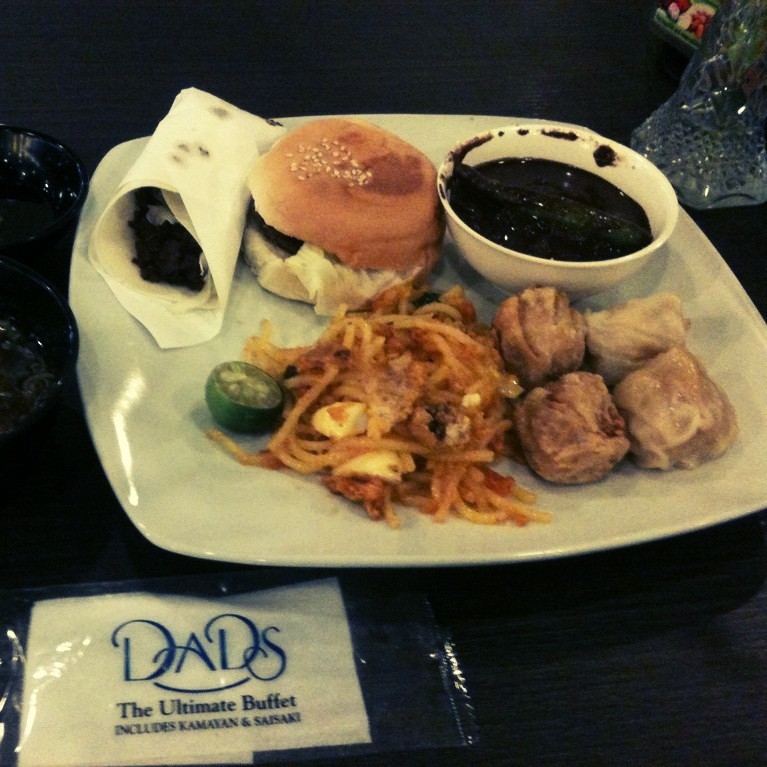
My wife and I love eat-all-you-can or buffet style restaurant. Most of our friends and relatives also loves this kind of food feast. In recent years, buffet style dining are blooming here in Manila. One of our favorite buffet style restaurant is "Dad's Ultimate Buffet". It's a buffet that includes 3 restaurants namely Dad's, Kamayan and Saisaki. Dad's specializes in continental dishes, Kamayan for Filipino dishes and Saisaki for Japanese dishes.

Dad's also offer "Dad's Merienda Buffet", it's an eat-all-you-can merienda (snacks or light meal) where you can enjoy a feast of sumptuous Filipino dishes. The buffet is only available at a certain time which is 3PM to 5PM everyday. We're about 20 persons when we first tried this buffet at their branch in SM Megamall.

When we went to Makati to fix some documents we opted to try their Glorietta branch. Since it's only 2:30PM when we arrive at the place we've decided to buy some stuffs first. It's a late-lunch date with my wife. Here's my first plate.

shawarma, burger, dinuguan (blood stew), fried/steamed siomai, pansit malabon
You will only pay 189 pesos ($4) for over 30 food choices. It includes soup, mami, stiry fry noodles, pastries, fries, dumplings, rice cakes and many more.

My wife's first plate:
puto't dinuguan, tokwa't baboy, fries, okoy, 2 kinds of pansit
Some of the pastries:
Since we are busy munching on this treats I only captured our first plate's. All in all, my wife had 3 plates and I had 5-6 plates. We had a great merienda-lunch that day. Next time when we go here I will surely take pictures first before enjoying the food.

Just got Lucky!.

Bitter Beef Stew (Papaitang Baka)


One of Filipino's favorite comfort food "Papaitan".  This dish is mainly compose with innards of beef or goat. It includes small intestines, ox tripe, cow's heart or liver and the bile. The bitter taste or flavor of this dish mainly comes from the bile. It is sometimes bitter-sour stew because other varieties includes tamarind (sampalok). Its a hit among beer drinkers here in our country and it's one of the most requested "pulutan". In manila if you want to eat "Papaitan" just visit the nearest cafeteria or carenderia and I assure that they got a serving for you. Most of my kababayan prefer this as a pulutan but for us it is best eaten with steamed rice.

I've prepared this one on a gloomy afternoon, the richness of this stew can invigorate your body in this kind of weather. You can easily distinguish papaitan meat vendors in the market. Just tell the butcher if how many kilos are you going to buy and they will give you proper portion of the innards. You also need to buy some meat of beef.

My wife enjoyed this one, she even reserve a bowl of papaitan for her to munch while watching TV later that night. I hope you can also enjoy this recipe.


Ingredients

1 kilo beef innards
4 cloves garlic (minced)
2 pcs medium onions (quartered)
5 pcs long green chili
1 thumb ginger (julliened)
sampalok mix
1 sachet Maggi magic sarap
2 tsp freshly ground peppercorn
1 tsp bile
2 tsp oil
5-7 cups water
salt to taste

Instructions 

1. Properly clean the innards by washing it through running water. You may scrub it with salt then rinse.
2. In a large pot or pressure cooker, boil water and add the innards. Wait for 45 to 60 minutes until all the innards are tender.
3. Drain the water and cut the innards into small pieces. Set aside.
4. In a large pot, saute garlic and onion until its soften then add ginger.
5. Put the innards and simmer for 5 to 10 minutes.
6. Add 5 cups of water and let it boil.
7. Put bile and chili's then add salt and pepper to taste. If you want a bitter-sour taste add the sampalok mix.


Just got Lucky!.

Baby Back Ribs BBQ


Last year when my wife and I unwrapped all the gifts for our wedding we are so excited and guessing what's on the big boxes and small boxes. Appliances are the most common gifts for wedding couples here in the Philippines. First, we opted to open small boxes which consist of a flat iron, kitchen utensils, plates and a lot of glasses. There are also a set of sleeping pillows and two cute small pillows that says "Mr. Right" and "Mrs. Always Right". When we are finished with the small ones, here comes much bigger gift boxes. I told my wife before our wedding if how many rice cooker are we going to have. When we are done unwrapping, we got three different rice cooker. Some of the gifts are an airpot, induction cooker, electric stove and a turbo broiler. The main reason why I come up with this recipe is because of our turbo broiler. First thing that comes to my mind we I saw this thing was a sumptuous baby back ribs. This recipe is easy to prepare it will only take less than an hour or two to enjoy this fancy meal.

By the way here's the gift live in action :)


 Ingredients

1 kilo baby back ribs (cleaned)
 for the dry rub:
2 tsp rock salt
1 tsp freshly ground pepper
1 tsp cayenne pepper
4 tsp brown sugar
2 tsp garlic powder
for the bbq sauce:
1/2 cup soy sauce
5 tsp tomato ketchup
3 tsp brown sugar
2 tsp oyster sauce

Instructions

1. Clean the baby back ribs by removing the membrane of the meat. The membrane is a thin skin-like layer on the bone side of the ribs. It will make your dish more tasty and flavorful if this was remove properly.
2. Combine all the ingredients for the dry rub in a bowl. Mix well until it all the powder blended well with each other.
3. Put the dry rub all over the baby back ribs, make sure that dry rub are distributed well on the meat. Put it on a plastic or zip-lock bag and refrigerate for 3 to 5 hours. Overnight is much better.
4. Wrap the meat with aluminum foil, put it on the turbo broiler and turn the temperature to the highest level. Cook it for 75 minutes.
5. In a separate bowl, combine all the ingredients for the bbq sauce.
6. Turn off the turbo broiler then take off the foil on the meat. Distribute and spread the bbq mixture on the meat.
7. Put the baby back ribs on the turbo broiler and wait until its charred for a more smoky flavor. Occasionally put bbq sauce on the meat every 5 minutes.

Just got Lucky!
Salmon head sinigang with miso


My wife and I can eat Sinigang daily or even a week. Sinigang is a Filipino stew characterized by its sour flavor most often associated with tamarind as its base. This dish is perfect for the rainy season to keep our body warm and active. There are many varieties of soup base for Sinigang, you can use guava, kamias, calamansi or any sour fruit and vegetable that you want as your base. It usually comes with vegetables like  kangkong (water spinach), radish and sitaw (long bean). You can cook this using beef, pork, chicken, fish and shrimp. I always cook this dish once or twice a week. I hope that you can try this one at home.


 Ingredients

1 kilo salmon head (chopped)
100 grams miso paste
3 tbsp pure tamarind paste or 20 grams "Sinigang Mix"
3 tsp oil
1 red onion (julienned)
2 cloves garlic (crushed)
3 pcs tomato (quartered)
3-4 pcs long green chilis
 1 bunch water spinach (kangkong)
800 ml water
salt and pepper to taste

Instructions

1. In a large pot, heat oil then saute garlic together with the miso paste. 
2. Add water, onion, and tomato. Wait to boil. 
3. Put the tamarind paste or "Sinigang Mix". Add more water depending on your preferred level of sourness.
4. Add salmon head and simmer for 3-5 minutes.
5. Put the water spinach and chilis. 
6. Add salt and pepper to taste.
7. Serve with rice and enjoy.

Just got Lucky!


Bibimbap (Mixed Rice with Vegetables)


Bibimbap or mixed rice with vegetables and meat are one of the first Korean dishes that I've tasted. It's like a Mongolian bowl but the ingredients are cooked separately. This one is a complete healthy meal, rice for carbohydrates, meat and egg for protein, vegetables for vitamins and minerals. The main highlight of this dish is the chili pepper paste but in this one I used garlic chili paste. Korean food are now popular in many countries together with their music and tv series/drama. Maybe someday I can visit Korea and try their authentic cuisine. Most Korean dishes are spicy, this is because of the cold weather in their country. You will notice that most of my recipes are about spicy and hot foods. Its a great thing that both my wife and I share the same spicy taste buds.


 Ingredients

250 grams beef strips
2-3 cups steamed rice
2 pcs egg
 1 medium carrot
1 medium cucumber
1 large onion
1 cup beansprouts
1/4 cup onion leeks
  salt 
freshly ground peppercorn
for garlic chili paste:
5 cloves garlic
3-5 chili fingers
2 tsp flour
5 tsp water

Instructions

1. Cut  carrot, onion leeks, cucumber and onion according to your preferred size.
2. Blanch the carrot, beansprouts and cucumber in hot water for 3-5 minutes. Set aside.
3. In a pan, saute onion and onion leeks, add salt and pepper to taste. Remove from oil and set aside.
4. Put beef strips on the pan and saute until meat is cooked then set aside.
5. In a blender, put the garlic, chili fingers, flour  and water. Blend until the consistency becomes smooth. You may add more chili's depending on the level of spiciness that you prefer.
6. In a bowl put rice on the center and all the other vegetables on the side including the beef strips.
7. Fry egg then put it on top and add generous amount of garlic chili paste.
8. Mixed all the ingredients and enjoy.

Just got Lucky!

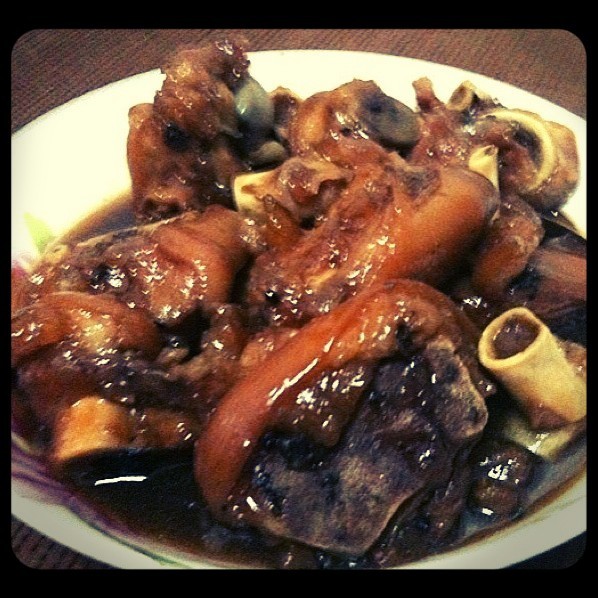
Braised Pork Hocks


Did you know that pork is the most widely consumed meat in the world? I've eaten a lot of pork dishes using different style of cooking and for me "Lechon" is the best. According to Anthony Bourdain: No Reservations, the best pig in the world is here in the Philippines which is "Lechon Cebu" (roasted pork) . It captured the heart of the American chef, author and television personality who loves to eat pork. There are many ways and style on how to cook pork. Just like chicken, most parts of a pig is consumed for food. This time I will share how to prepare one of my favorite pork dish, "Paksiw na Pata" (braised pork hocks). I learned this recipe from my mother who loves to cook fatty dishes. I hope you can enjoy this dish and make sure don't forget to serve it with steamed rice.


 Ingredients
1 kilo pork hocks
oil for frying
1/2 cup soy sauce
1/4 cup vinegar
2 tsp oyster sauce
5 tablespoon brown sugar
4 cloves garlic (crushed)
1 medium red onion
3 pcs dried bayleaf
salt 
freshly ground peppercorn
water

Instructions

1. In a large pan, heat oil and fry the pork hocks until golden brown. Drain excess oil and set aside.
2. Heat 2 tablespoon of oil on a separate pan then saute garlic and onion until its soft.
3. Add the pork hocks, soy sauce, oyster sauce and 1/4 cup of water. Let boil.
4. Put vinegar, sugar and dried bayleaf. Simmer for about 60 to 90 minutes under low heat. Add water as necessary. Make sure that the meat fall off the bones.
5. Add salt and pepper to taste. You may add additional sugar if you prefer.
6. Serve it with a cup of steamed rice. 

Just got Lucky! 

Kani Bacon


"Itadakimasu", "Kampai", "Irasshaimase", "Domo Arigato", "Gochiso-sama". I know everyone heard this traditional phrases when you dine in Japanese restaurants. Meals in japan begins with the phrase "itadakimasu" ( let's eat) and ends with "Gochiso-sama" (it was a feast). Japanese cuisine is very popular and well renowned worldwide. Most of us can easily identify dishes that are distinctively Japanese like sushi, maki, sashimi, tempura and ramen. This Kani Bacon that I've prepared has been always one of my favorite thing to order in Japanese restaurants. It is actually a crab stick wrapped in bacon. For a healthier option, you can also add veggies such as carrots, asparagus, bell pepper, etc.. There are many ways to cook this dish, it can be pan-grilled, grilled, deep fried or steamed.


 Ingredients

15 pcs crab stick
250 grams honey cured bacon
cooking oil, for frying
1 tsp garlic powder
5 tbsp soy sauce
1 tsp oyster sauce
5 tbsp brown sugar
1/4 cup water
salt and pepper


Instructions

1. Cut crab stick in half, wrap the bacon around the crab stick and secure with a toothpick.
2. In a large pan, heat oil, deep fry until bacon turns to golden brown. Drain excess oil and set aside.
3. In a sauce pan, put soy sauce, oyster sauce, and water. Let boil.
4. Add brown sugar and  garlic powder. Stir until sugar begins to caramelized and make sure that the sauce is thick enough.
5. Sprinkle salt and pepper to taste. You may add more sugar if you want a sweeter sauce.


Just got Lucky!  

Chili Garlic Crab


Seafood is abundant here in the Philippines because of its land structure. The islands is covered with seawater that has great amount of fresh seafood. This crab was bought for about $8 a kilo at the supermarket. At home the usual  way to prepare crab is to steam and then you dip it to a mixture of soy sauce, calamansi and lots of chili's. Since I wanted to give it a twist I've come up to add some spice to make this dish scrumptious.


 Ingredients
4-5 pcs medium size crab
1/4 cup butter
4 cloves garlic (chopped)
 5 pcs chili fingers (chopped)
salt 
freshly ground peppercorn
water

Instructions

1. In a large steamer, let water to boil then put the crab on top.
2. Place the steamed crab on a separate plate then take off the top shell.
3. In a non-stick pan heat oil then put the garlic, cook until crispy and golden brown.
4. Remove cooked garlic from the oil then set aside.
5  Put the butter to the oil then saute the chili fingers.
6. Add the crab, stir well.
7. Put it on a serving plate and add the crispy garlic on top.

Just got Lucky! 

Korean Style Fried Chicken


This time the dish that I will share was courtesy of my friend "JP" (Janna Patricia). She brought this one during one of our putlock session at our office. This dish was a hit to all of us and we requested that she must bring another batch the next day. I asked JP on how she prepared this one and I "Just got Lucky" that she shared the recipe on how to create this tasty dish. Same dish was serve by different food chains here in manila like "Bon Chon" and "Manang's Chicken". You can try this one to add twist to your fried chicken. I assure you that your kids and also kids at heart will really enjoy this together with a cup of rice.


 Ingredients

1/2 kilo chicken
cooking oil for frying
1/2 cup soy sauce
1/4 cup brown sugar 
3-4 cloves garlic (minced)
1/2 cup cornstarch for breading

Instructions

1. Coat the chicken with cornstarch.
2. Heat oil in a large frying pan, deep fry chicken until golden brown. Drain well and put on a plate with tissue paper to remove excess oil.
3. In a small pan put soy sauce and bring to boil.
4. Add garlic, simmer for a minute then put the sugar. Mix thoroughly until sugar melts. (you can add more sugar depending on the sweetness that you prefer)
5. In a small container with cover put the mixture and chicken. Shake until chicken is fully coated.

Just got Lucky!  

Spicy Chicken Feet Adobo


"Chicken!" most of us love chicken, right? and the most popular one "FRIED CHICKEN".. haha. Most parts of the chicken here in the Philippines are being utilize for cooking. Nearly all the parts of the chicken can be used for food. Thigh for frying, breast for fillet, buffalo wings, isaw (grilled intestines), isot (grilled chicken butt), helmet (grilled chicken head), adidas (grilled chicken feet), liver and gizzard. There are so many recipes that can be found on how to cook certain parts of the chicken. One of my favorite chicken dish "Spicy Chicken Feet Adobo". I hope you can enjoy this simple but indulging recipe, you can eat this as an appetizer, snack or even serve it with rice :)


 Ingredients

1/2 kilo chicken feet
1/2 cup soy sauce
1/4 cup vinegar
1/4 cup brown sugar 
1 tsp freshly ground peppercorn
3 pcs dried bayleaf
3-5 pcs chili fingers
3-4 cloves garlic (minced)
1 medium onion
1 cup water
salt to taste

Instructions

1. Clean chicken feet by removing the scales and cutting the nails. Rub salt and rinse thoroughly with water.
2. On a non-stick pan, saute garlic and onion together with the chili fingers.
3. Add the chicken feet, soy sauce, vinegar and water. Wait to boil.
4. Put the dried bayleaf, peppercorn, sugar and salt. Simmer until the chicken feet becomes tender or until meat "fall off the bones".
5. Add sugar and salt depending on the sweetness that you prefer.

Just got Lucky!


Blog Promotion Top Blogs
Promote Your Blog
Free Blog Directory
Blogs Blog Tools Allie Marie

Site Meter